Loading...
Serving Cypress, CA and surrounding areas. (657) 337-7090
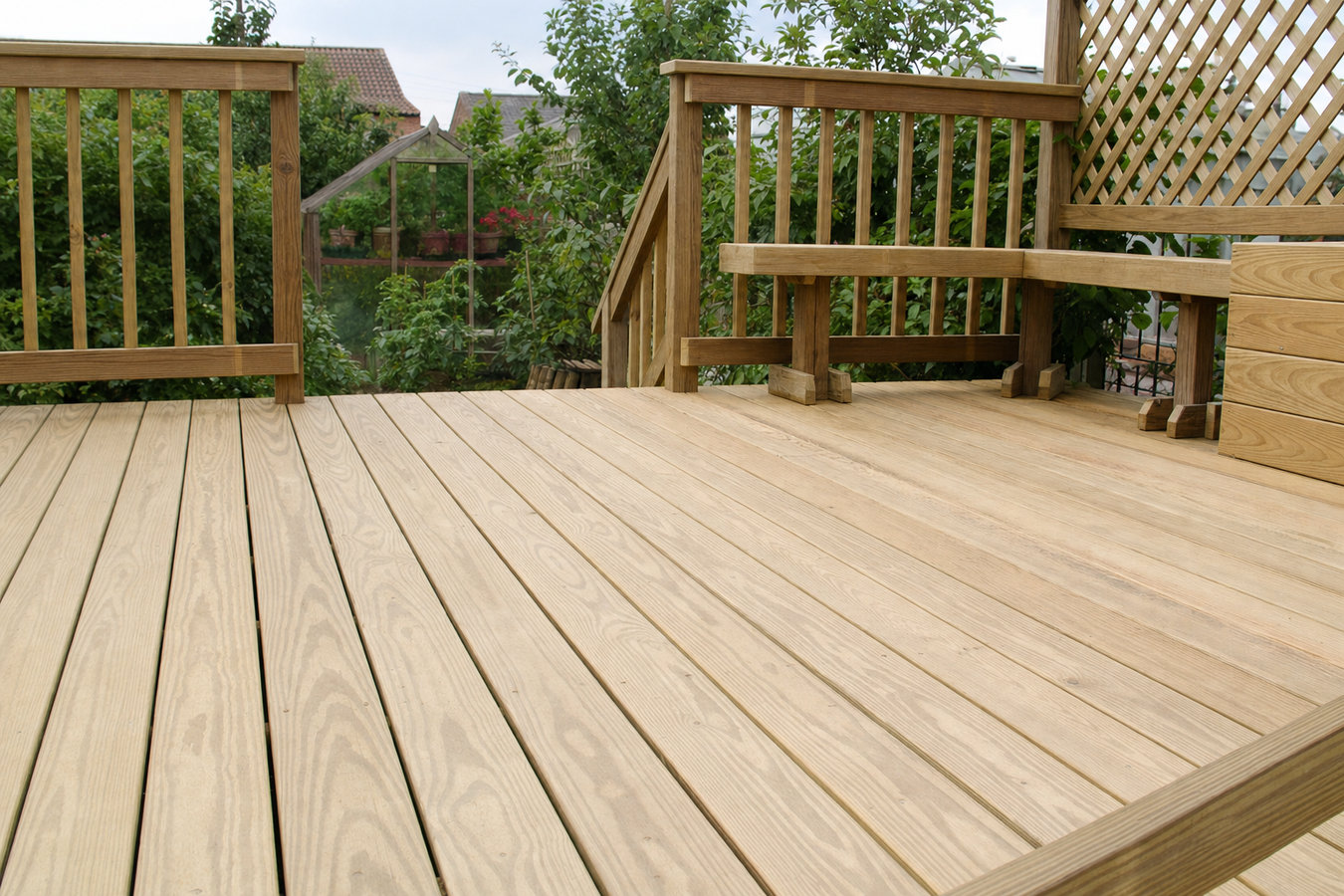
A pressure-treated wood deck is one of the most cost-effective ways to add real outdoor living space to your Cypress home - when it is built correctly and permitted through the city from day one.
Pressure-treated wood deck construction in Cypress starts with concrete footings, builds a structural frame of beams and joists, lays the decking boards on top, and closes out with a city permit and inspection - most projects take one to two weeks of on-site work once permits are approved, with the full timeline running six to ten weeks including permit review.
Pressure-treated lumber is regular wood soaked in preservatives under high pressure, which makes it resistant to rot, fungal decay, and insect damage. It is the most common choice for decks in Southern California because it is widely available, straightforward to work with, and costs significantly less upfront than composite materials. A well-built pressure-treated deck in Cypress can last fifteen to twenty-five years or longer when sealed and maintained on the right schedule. If low maintenance is a higher priority than upfront cost, our deck staining and sealing service can help you stay on top of that maintenance cycle after the build.
One detail homeowners sometimes miss: pressure-treated lumber is sold wet from the treatment process. That means you need to wait sixty to ninety days after construction before applying any stain or sealant, or the finish will not bond and will peel within a season. We walk you through that timeline before we leave the job so you are not caught off guard.
If the deck surface feels rough and splintered, or if boards have developed deep cracks along the grain and feel soft underfoot, the wood has dried out past the point where sealing will fix it. In Cypress, strong year-round sun accelerates this process - a deck that looks fine at five years can deteriorate quickly between years eight and twelve.
A solid deck should feel firm with no bounce or sway. If you notice movement when you walk near the edges, or the structure shifts when you lean on a railing, the framing may have weakened from rot, loose fasteners, or footings that have shifted. This is a safety issue that warrants a professional evaluation right away.
Many Cypress homes have generous backyards that sit empty because there is no comfortable outdoor space connecting the house to the yard. If you find yourself avoiding the backyard because there is nowhere to sit or entertain, a deck is the most direct solution - it creates a defined space that makes the outdoor area feel like a real extension of the home.
The base of each post - where it meets the footing - is the most vulnerable part of any deck. If the wood feels soft or spongy near the ground, or shows dark discoloration, rot has likely set in. Even if the rest of the deck looks fine, compromised posts are a structural problem that needs to be addressed before the deck becomes unsafe.
We handle the full project from design through city permit closeout. That includes a site visit to measure and assess your yard, preparing permit-ready drawings, submitting the application to the City of Cypress, digging and pouring concrete footings, framing the structure, laying decking boards, and installing railings if the deck height requires them. If your home is in an HOA, we help you prepare the submission documentation so both the city and association approvals can move at the same time. Homeowners who want a natural wood look but with a longer lifespan than standard pressure-treated lumber should ask about cedar wood deck construction as an alternative - cedar is naturally rot-resistant and does not require the preservative treatment process.
We use galvanized or stainless steel fasteners throughout - standard steel rusts quickly in exterior conditions and leads to the dark staining and structural loosening that shows up on poorly built decks within a few years. Decking boards are spaced to allow water to drain off rather than pool, which is one of the single most important factors in how long the wood lasts. California requires guardrails on decks thirty inches or more above the ground, and we budget for those from the start rather than treating them as an afterthought.
The most straightforward build - ideal for flat or gently sloped yards where a low frame height keeps the project scope and cost manageable.
For homes with a back door that steps out well above grade - additional structural work ensures the deck is solid and meets all railing requirements at height.
Stair design is often where poorly built decks show their first problems - we frame stairs into the main structure rather than attaching them as an afterthought.
Integrated features built into the framing from the start are more durable and cleaner-looking than accessories added after the deck is finished.
If an existing deck is beyond repair, we handle demolition and haul-away before building the new structure over properly designed and permitted footings.
For Cypress neighborhoods with design review requirements, we prepare drawings and material documentation so the HOA review can proceed smoothly alongside the city permit process.
Cypress sits in a part of Orange County where decks get year-round sun exposure and foot traffic - a genuinely different environment from most of the country, where a deck gets a real off-season rest. That constant UV exposure means wood ages faster here, and the staining and sealing maintenance cycle needs to run on a shorter schedule than national recommendations suggest. Homeowners who go in knowing this - and who plan for that maintenance upfront - tend to be the ones whose decks still look good at fifteen years. The American Wood Protection Association sets the treatment standards for pressure-treated lumber, and using lumber rated for the correct use category - particularly ground contact at post bases - is one of the details that separates a deck that lasts from one that rots at the base within five years.
The clay-heavy soils in parts of Cypress and neighboring communities like Buena Park expand when wet and shrink when dry. That seasonal movement puts real stress on concrete footings if they are not designed with adequate depth and sizing for local conditions. A deck that starts settling or leaning within a few years is almost always a footing problem - and it is far easier to get the footing design right at the start than to fix it after the frame is already built.
Reach out by phone or through our contact form and we will follow up within one business day. We will schedule a free site visit to measure the space, look at the ground conditions, and talk through design options - including what the permit process involves and whether your neighborhood has HOA requirements.
Once you approve the design and sign a contract, we submit the permit application to the City of Cypress in our name. Plan review typically takes two to six weeks. If your home is in an HOA, we help you prepare that submission at the same time so both approvals move in parallel rather than one after the other.
Construction starts with digging and pouring concrete footings sized for Cypress soil conditions. The city inspector checks the framing before boards go down - we schedule that inspection and handle the coordination. Once the frame passes, decking boards and railings follow quickly, often in two to four days on a standard project.
We schedule the final city inspection to close out the permit, then clean up the work area completely. Before we leave, we walk through the finished deck with you. We also remind you of the sixty-to-ninety-day drying window before applying any stain or sealant - and explain how to test when the wood is ready.
We respond within one business day. Written quote, no obligation.
(657) 337-7090We submit every permit application to the City of Cypress in our name, not yours. That makes us legally responsible for the work meeting code - and it gives you a clean permit record on file when you sell your home. A deck without a permit is a liability in the Orange County real estate market, and we never put a customer in that position.
Clay-heavy soils in the Cypress area shift with seasonal wet and dry cycles. We account for that in our footing design before digging starts - depth, sizing, and concrete mix all matter here in ways that a contractor unfamiliar with local conditions might not address. This is what separates a deck that stays solid for twenty years from one that begins to lean within five.
A quote that leaves out permit fees will look cheaper than it really is. Every written estimate we provide breaks down labor, materials, and permit costs as separate line items so you know exactly what you are agreeing to before a single hole is dug. No surprises on the final invoice.
A significant portion of Cypress falls under HOA design review requirements. We have navigated those processes for homeowners across Cypress and surrounding communities, and we know what associations typically ask to see - drawings, material specs, color samples. We prepare that documentation from the start so your HOA review does not become a delay.
These details are what the difference looks like between a deck that is still solid at year fifteen and one that causes problems at year five. You can verify contractor credentials at the California Contractors State License Board before signing anything - a legitimate contractor will encourage you to do exactly that.
Naturally rot-resistant cedar is a premium alternative to pressure-treated lumber - no treatment chemicals, a distinctive look, and a longer lifespan between maintenance cycles.
Learn MoreThe maintenance service that keeps your pressure-treated deck looking good and structurally sound - we handle the prep, application, and scheduling so you stay on the right cycle.
Learn MoreCypress permit review timelines stretch in the spring - reach out now and we will get your project into the queue before the wait grows.