Loading...
Serving Cypress, CA and surrounding areas. (657) 337-7090
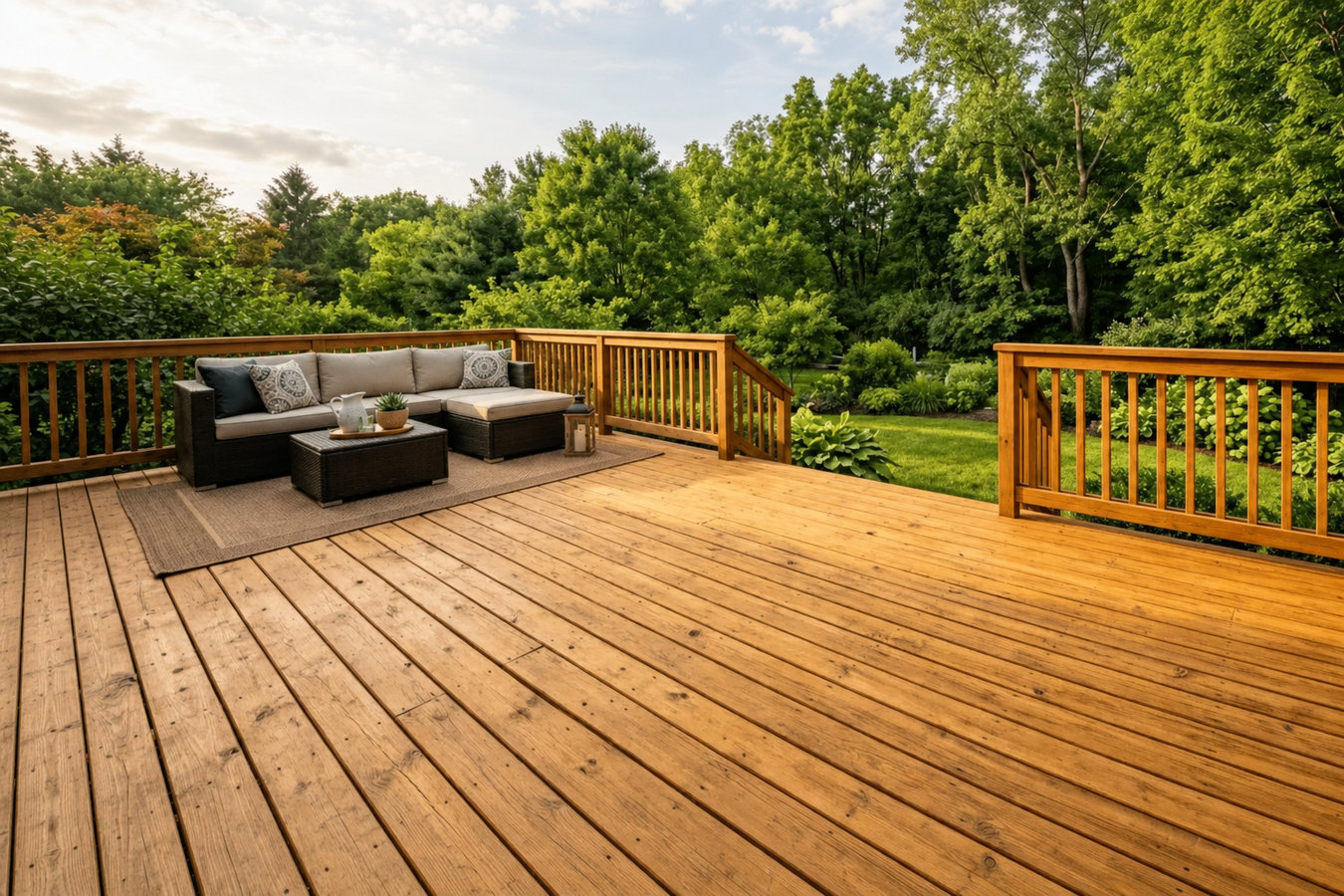
Cedar is naturally resistant to rot and insects - no chemical treatment required. Get a beautiful, durable deck built to survive Cypress summers and pass city inspection.
Cedar wood deck construction in Cypress means working with a wood that contains natural oils making it resistant to rot, insects, and moisture without chemical preservatives - most projects for a standard backyard take one to three weeks of on-site work once permits are in hand, with the full timeline running four to eight weeks including city review.
That natural resistance is what separates cedar from pressure-treated lumber. With pressure-treated wood, the protection comes from chemical compounds driven into the fibers under pressure. With cedar, it is built in. For families with kids or pets who spend time on the deck, that distinction matters. Cedar also has a warm, reddish-brown appearance and a distinctive grain that most homeowners find more attractive than the greenish tint of fresh pressure-treated boards. If you want a low-maintenance alternative that skips the wood upkeep cycle entirely, our deck repair and replacement page covers composite and other material options when it is time to rebuild.
One thing to understand upfront: cedar grades vary, and the grade affects both appearance and longevity. Higher-grade cedar has tighter grain, fewer knots, and holds up better over time - but it costs more. Before you sign any contract, ask to see a sample of the grade being proposed. A contractor who cannot show you a sample or explain the difference between grades is not giving you enough information to make a good decision.
If boards have split lengthwise, feel rough with splinters underfoot, or flex noticeably when you walk on them, the surface wood has reached the end of its useful life. In Cypress, where UV exposure is intense year-round, wood decks that were not regularly sealed tend to deteriorate faster than homeowners expect - especially between years eight and twelve.
Press firmly near the base of your house where the deck connects to the wall. If the wood feels soft, gives slightly, or looks darker than surrounding boards, moisture may be getting behind that connection. This is one of the most common failure points on older decks in Southern California, and catching it early prevents a much more expensive repair to both the deck and your home framing.
A deck that moves noticeably when you walk on it - especially near the stairs or railing - has a structural problem, not just a cosmetic one. After strong Santa Ana wind seasons in the Cypress area, it is worth walking your deck deliberately and checking whether anything feels less solid than before. Movement means fasteners, posts, or framing connections have been compromised.
If your backyard is just a patch of grass or concrete with nowhere to sit, entertain, or relax, you are leaving the most livable part of your Southern California home underused. Cypress homeowners who add a cedar deck consistently describe it as the single change that made their home feel larger and more enjoyable throughout the year.
We handle the full project from site visit through final city inspection. That means measuring and assessing your yard, preparing permit-ready drawings for the City of Cypress, digging and setting concrete footings, building the structural frame, laying cedar decking boards at the correct spacing for drainage, and installing railings where the deck height requires them. If your neighborhood has an HOA, we prepare the documentation their review process needs so both approvals can move at the same time. For homeowners considering a lower-maintenance surface material, we can also walk you through how pressure-treated wood deck construction compares to cedar on upfront cost, appearance, and long-term care requirements.
The difference between a cedar deck that lasts 25 years and one that starts failing in 7 is almost entirely invisible on day one - it is in the framing connections, fastener type, ledger attachment, and how well the water drainage is designed into the structure. We use stainless steel or hot-dipped galvanized fasteners throughout because standard steel rusts, stains the wood, and loses holding strength within a few seasons of outdoor exposure. The ledger - the board that attaches the deck to your house - is flashed and sealed against your stucco wall using a detail specifically designed for Southern California construction, where the most common failure mode is water intrusion behind that connection.
Ideal for flat or gently sloped yards - the most straightforward build at the lowest cost, with full permit coverage.
For homes where the back door steps out well above grade, with structural framing designed to meet railing requirements at height.
For yards with significant grade changes or homeowners who want defined zones for dining, lounging, and outdoor cooking.
Benches, planters, and privacy screens integrated into the framing from the start rather than added as afterthoughts.
Full demolition and haul-away of an existing deck, then a new cedar build over properly permitted and engineered footings.
For Cypress neighborhoods with design review, we prepare the drawings and material documentation the association needs before a single board is cut.
Cypress gets roughly 280 sunny days per year, and that relentless UV exposure bleaches and dries out unprotected cedar faster than in most of the country. What this means for your deck is that sealing or oiling the wood is not optional here - it is the single most important maintenance step after the crew leaves. The good news is that cedar handles this climate better than many other wood species because its natural oils give it a head start. Builders and homeowners in this area have used it for decades because it performs consistently in the conditions you actually face. The Buena Park, CA and La Palma, CA neighborhoods we serve face the same UV and wind conditions, and cedar consistently holds up well across all of them.
The housing stock in Cypress skews toward 1960s and 1970s tract homes, and the stucco exterior walls common on those homes require a specific ledger attachment approach. If the ledger is not flashed correctly against stucco, water gets in behind it and causes rot inside your wall - sometimes for years before you notice it. Contractors who learned their trade in other regions often get this detail wrong on Southern California homes. The fall and winter Santa Ana winds - which can gust above 50 mph in this part of Orange County - also create a seasonal stress test for deck structures. A cedar deck built with properly sized and spaced fasteners handles this without issue, but one with undersized hardware can develop creaks and movement after a strong wind season.
Call or submit a form and we will get back to you within one business day. We will ask a few basic questions - yard size, HOA status, what you are hoping to use the deck for - so the site visit is focused and efficient.
We visit your home, walk the backyard, check the exterior wall condition where the ledger will attach, and measure the space. You receive a written quote that breaks down labor, materials, and permit fees separately - no bundled numbers that hide the real costs.
Once you approve the proposal, we submit to the City of Cypress and, if needed, prepare your HOA documentation. Permit review typically takes two to four weeks - we keep you updated throughout so you are not left wondering where things stand.
Construction begins once the permit is issued and materials are on site. A city inspector reviews the framing before we close out. At the end, we walk the finished deck with you and go over the maintenance schedule for sealing - in Cypress sun, doing this within the first year makes a real difference.
No pressure, no obligation. We give you a written estimate with permit costs included so you know exactly what you are looking at.
(657) 337-7090Every project goes through the City of Cypress permitting process before a board is cut. That means a city inspector - not just us - signs off on the structure at key stages. You get independent verification that the deck is built safely and to code.
Homes in Cypress are predominantly stucco-clad, and the ledger-to-stucco attachment is where water damage starts on poorly built decks. We use flashing and waterproofing details specific to stucco construction - the same approach that protects your wall as well as the deck itself.
A large share of Cypress neighborhoods require HOA design approval before construction begins. We know what these associations need and include that documentation preparation in the project scope - so you are not stuck navigating the approval process on your own.
We use stainless steel or hot-dipped galvanized fasteners on every cedar deck build. Standard steel corrodes fast in outdoor use, staining the wood and losing holding strength within a few seasons. The right hardware is not glamorous, but it is one of the biggest factors in whether your deck holds up over a decade of Cypress weather. The Western Red Cedar Lumber Association maintains grading and species standards we follow for every cedar project.
When every one of these details is handled correctly from day one, you end up with a deck that still feels solid and looks good a decade later - not one that starts showing problems in year three. That is what we are building toward on every project.
When an existing deck has structural damage or is past its useful life, we assess what is salvageable and rebuild the rest.
Learn MoreA lower upfront cost than cedar with similar structural performance - a good option when budget is the primary driver.
Learn MoreSpring and early summer fill up fast - call or submit a form today to get a written estimate and hold your spot on the schedule.